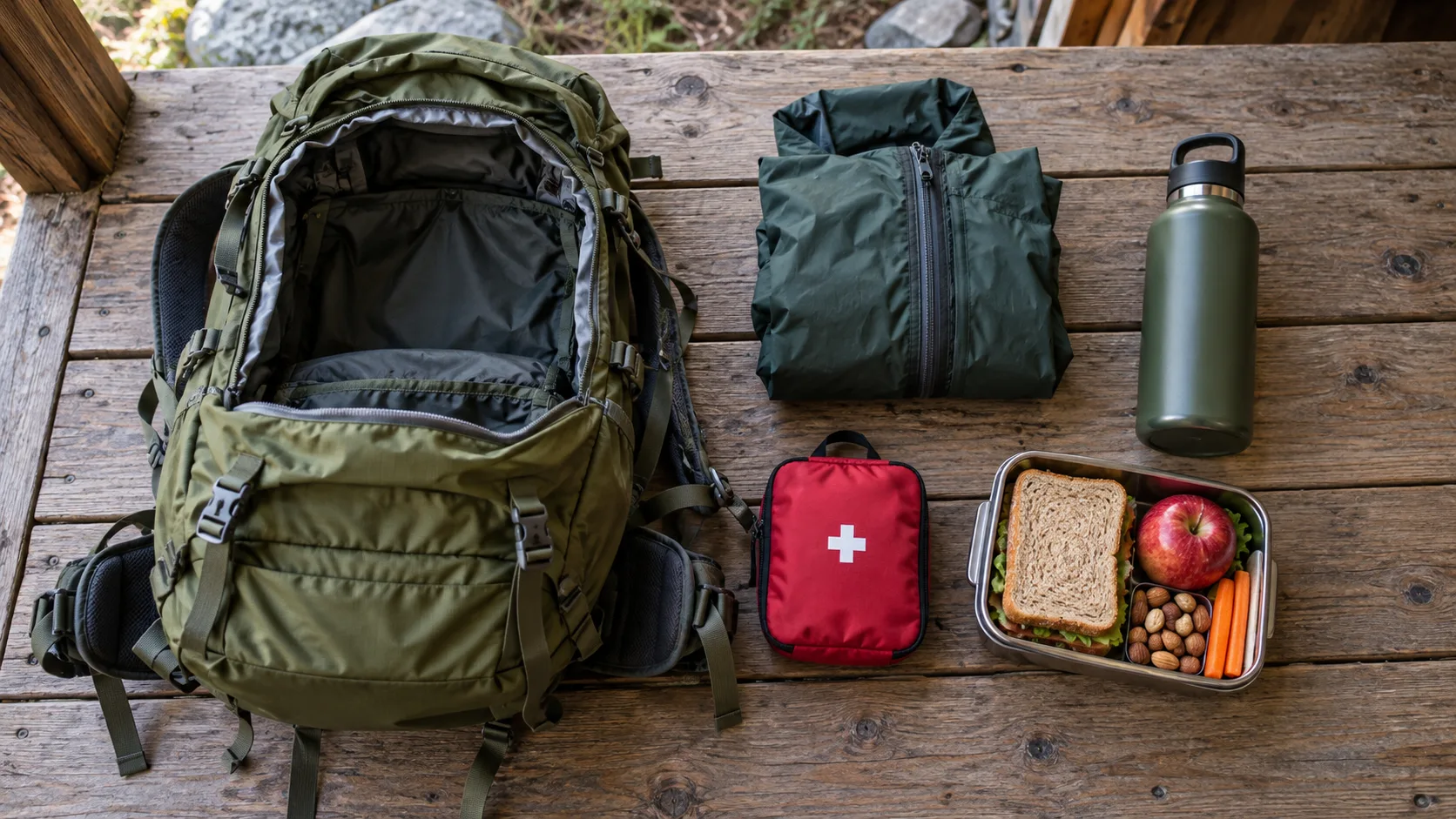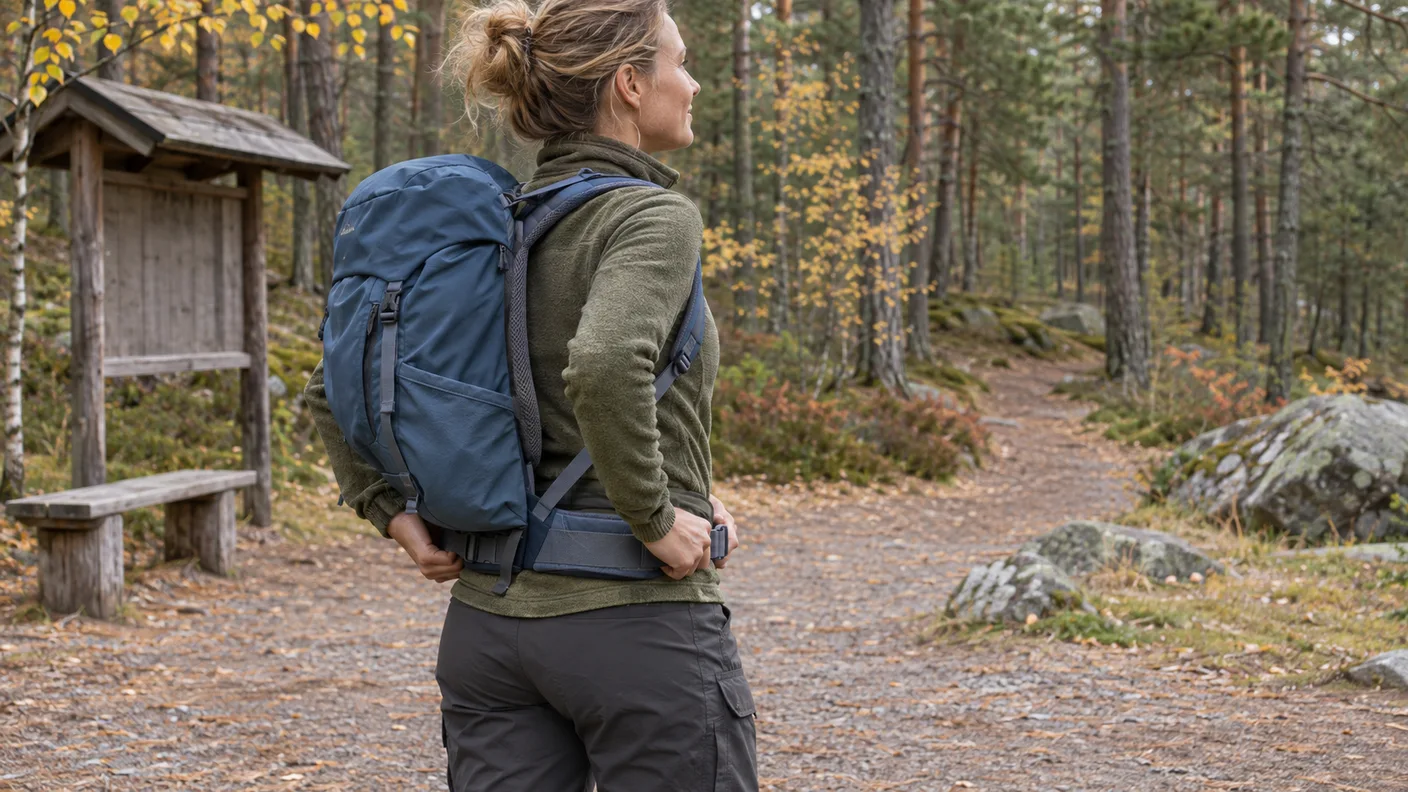
Fit your hiking backpack with a load inside. Adjust the torso length, position the hipbelt over the upper part of your hip bones, then adjust the shoulder straps, load lifters and sternum strap according to the model's instructions. The pack should sit close without restricting your breathing.
Pack for the walk you intend to take
An empty backpack tells you little about how it feels with food and water. Before a day walk near Lake Siljan, I would put in the intended load, including the water, before adjusting the straps.
Osprey's fitting guide recommends a load resembling real use. Ask for help lifting a heavy pack. If the contents move around, also check how to pack a stable load.
Adjust the torso length and hipbelt
Check whether the harness length is adjustable and how its locking mechanism works. Loosen the straps before fitting. A fixed torso length cannot be made longer merely by loosening the shoulder straps.
Naturkompaniet's instructions place the hipbelt level with the upper edge of the hip bones. Tighten it enough to stay in position without digging in. If it slips while walking, check its position and fit before tightening the shoulders further.
Set the shoulder straps and load lifters
Tighten the shoulder straps until they sit comfortably against your body. Osprey stresses that they should not restrict breathing or press too tightly around the collarbones. If the pack still sits incorrectly, check the torso length again.
Load lifters connect the upper shoulder straps to the pack. On models that have them, they bring the load closer to your back. Follow the model's instructions rather than trying to create one particular angle on every type of backpack.
Fasten the sternum strap and walk
The sternum strap keeps the shoulder straps in position. Adjust its height where possible and fasten it without compressing your chest. It should not have to carry the load in place of a loose hipbelt.
Walk a few steps. Pause. Try bending and raising your arms with the load still on your back.
For a personal trial, I would walk for ten minutes and stop twice to take the pack off and put it back on. Adjust one strap at a time to notice what helps. If pressure or rubbing persists, you may need a different torso length, belt size or pack model; ask a shop to help you try it with a load.
Check again when the load changes
Two nights in a tent mean a different load from a short walk from the car. Try the pack again with the sleeping equipment inside, and check that rainwear remains accessible after tightening the straps. Yesterday's adjustment need not suit today's packing.
After the walk by Siljan, the picnic spot may be the place you want to revisit. In FARON, you can save the stop with a photo and note on the map. Log your first overnight stay to collect the places from your trip.
Frequently asked questions about backpack fit
Should I fit an empty pack?
No. Use a load resembling what you will carry so you can assess the fit during use.
Where should the hipbelt sit?
Position it over the upper part of your hip bones and follow the model's fitting instructions.
Should I tighten the shoulder straps as far as possible?
No. They should sit comfortably without restricting breathing or creating strong pressure.
What if adjusting the straps does not solve the fit?
Check the torso length and belt size. Ask for a fitting in a shop if the loaded pack still feels wrong.