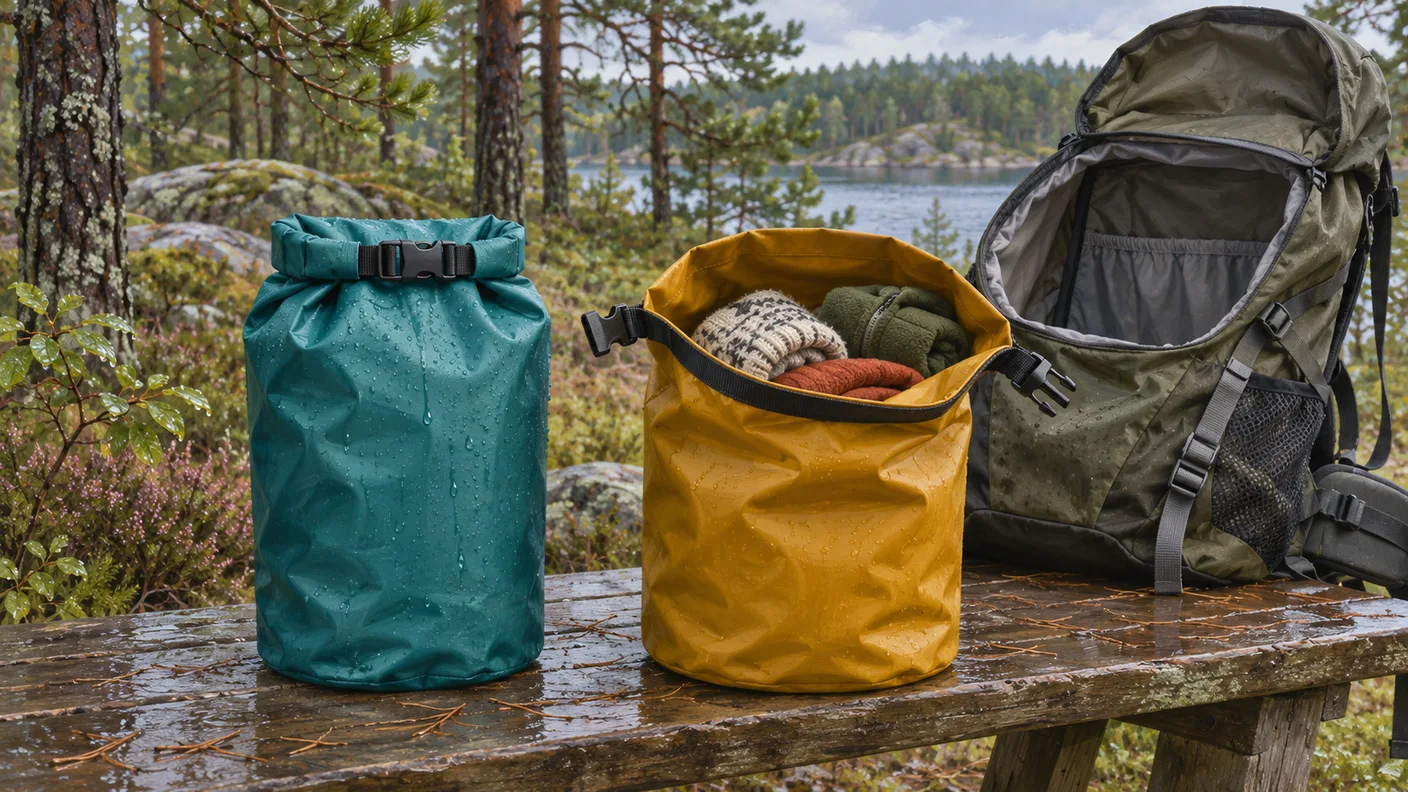
A waterproof dry bag needs both a watertight construction and a correctly closed top to protect your clothes. Choose its size by packing your spare layers and leaving enough room to roll the top as instructed. Waterproof does not automatically mean suitable for submersion.
Try it with the clothes you will carry
For a wet weekend in Tiveden, I would lay out sleeping clothes, dry socks and a warm layer before choosing a capacity. Try the whole bundle in the bag. If it reaches the opening, there is no room left for the closure, even if everything technically fits.
Two smaller bags can make access easier than one large bag: one for sleeping clothes and another for daytime changes. A thin summer top and a thick fleece take up different amounts of space. Our guide to packing a hiking backpack helps you keep daytime essentials near the opening.
Roll the top evenly
Pack the bag. Squeeze out excess air. Align the edges and roll in the same direction without leaving folds that form a gap. Sea to Summit's closure instructions specify an initial fold over the sealing strip and at least two more rolls before fastening the buckle. Follow your model's instructions if they differ.
If you can only manage one loose roll, remove some contents or use a larger bag. Pulling the buckle together over an overfilled opening will not make a reliable seal.
Check the intended exposure
Fjällräven's Waterproof Packbag 20 provides a concrete example: it has a 20-litre capacity, coated fabric and taped seams, but the manufacturer explicitly excludes underwater use. Read the limits for the model you choose.
A phone or camera that could end up in the water needs protection designed for that exposure. Sea to Summit recommends a hard case with an O-ring for the highest protection in these circumstances. An ordinary clothing dry bag does not guarantee that electronics will survive a dunking.
Keep the dry change separate
Put wet socks elsewhere when you change. The bag may keep rain out, but it will not dry a damp garment packed with your sleeping clothes. Check the fabric and coating before the trip; damage needs attention or replacement in line with the manufacturer's advice.
After two nights, the campsite itself may be what you want to return to. Save a photo and a note at the overnight stop in FARON, and the place stays on your map for the next weekend's plans. Log your first night.
Questions about dry bags
Can I use the bag as a pillow?
Only if the manufacturer says it is designed for that. A roll-top closure is not automatically built to withstand the pressure of lying on the bag.
Does every item need its own bag?
No. Group items that need to stay dry and that you will want to take out together.
Is a compression sack always waterproof?
No. Compression describes how the contents are squeezed down; check the fabric, seams and closure's intended water protection separately.
How should I store the bag at home?
Let it dry completely before putting it away. Follow the care instructions so moisture does not stay trapped inside.